
Die Expanse verwebt Mass Effect in ihre Science-Fiction-Saga
Yes — The Expanse: Osiris Reborn does, in fact, wear the DNA of Mass Effect like a second skin. But far from being a mere imitation, it’s a masterful synthesis of Mass Effect’s narrative depth, worldbuilding grandeur, and player agency, fused with The Expanse’s gritty realism, political tension, and hard-sci-fi ethos — all wrapped in the rich, tactical RPG framework that made Warhammer 40,000: Rogue Trader such a triumph.
Here’s how deeply Mass Effect’s influence runs through Osiris Reborn, and why it’s more than just a homage — it’s a spiritual successor.
🔹 1. Narrative Structure: The Hero’s Journey, Reimagined
Mass Effect’s core arc — a lone commander (or crew) navigating galactic politics, ancient prophecies, and existential threats — is front and center in Osiris Reborn. You’re not just another soldier in a war. You’re a figure with agency, moral weight, and a destiny that ripples across star systems.
But here’s the twist: The Expanse version of that journey isn’t about being a messianic savior. It’s about navigating moral ambiguity in a fractured human civilization, where alliances shift, truths are weaponized, and every decision has long-term consequences. The game leans into The Expanse’s signature theme: “The universe is indifferent. You fight anyway.”
This isn’t Mass Effect’s idealistic, unity-through-diversity arc. It’s more human. More flawed. More real.
🔹 2. Tactical Combat: BioWare Meets Hard Sci-Fi
The combat in Osiris Reborn is tightly choreographed, turn-based, and deeply strategic — a hallmark of both Mass Effect: Andromeda’s tactical roots and Rogue Trader’s precision. But unlike Mass Effect’s often flashy, sci-fi spectacle, Osiris Reborn dials in the realism.
- Environmental awareness: Cover mechanics are brutal and impactful. A single well-placed shot through a cracked bulkhead can end a squad member’s life.
- Resource management: Ammo, medkits, and cybernetic implants are scarce. You don’t reload for fun — you plan your fire.
- Tactical depth: Abilities aren’t just flashy — they’re contextual. A hacker’s EMP pulse might disable drones, but it also fries the comms, cutting off reinforcements.
This isn’t Mass Effect’s smooth, cinematic combat. It’s The Expanse’s cold, mechanical warfare — where every bullet counts and every wound matters.
🔹 3. Character Development: Dialogue, Loyalty, and Consequences
Owlcat has long excelled at meaningful relationships, and Osiris Reborn leans hard into that. Your companions aren’t just stats and quirks — they’re people with pasts, traumas, and political allegiances.
- Loyalty arcs mirror Mass Effect’s emotional investment, but they’re grounded in The Expanse’ ideological fractures.
- Dialogue trees are long and weighty, with real consequences. Choosing to side with the OPA, the Martian Congressional Republic, or the Belters isn’t just flavor — it reshapes the political landscape, changes mission availability, and alters how factions view you.
And yes — there are romance options. But they’re not just romance. They’re infiltrations, alliances, and betrayals. A relationship with a Martian officer might open doors in the Belt, but it could also compromise your neutrality.
🔹 4. Worldbuilding: The Weight of a Broken Solar System
Where Mass Effect builds a galaxy of wonders, Osiris Reborn builds a crumbling solar system, where humanity hasn’t united — it’s fractured. The game masterfully recreates the desolate beauty of Ceres, the oppressive domes of Mars, and the blistering void of the Ring.
- The alien threat isn’t a mysterious, ancient race — it’s humanity itself, driven to desperation by resource wars, class divides, and colonial neglect.
- The "protagonist" isn’t a galactic savior — they’re a survivor, a soldier, a refugee, or maybe a rogue scientist caught in the crossfire.
This isn’t Mass Effect’s "Everything is connected." It’s The Expanse’s "No one’s in control — not even the stars."
🔹 5. Owlcat’s Signature Touch: RPG Depth Meets Narrative Soul
The real magic lies in how Owlcat blends genres. You’re not just playing a Mass Effect game with The Expanse aesthetics. You’re playing a hard sci-fi RPG that understands what made BioWare great — and why it’s time to evolve.
- Customization: Your character isn’t just a template. You can build a cyborg with a prosthetic brain, a former Belt miner with a grudge, or a pacifist politician who’s never fired a weapon.
- Faction mechanics: Unlike Mass Effect’s all-or-nothing loyalty, Osiris Reborn lets you manipulate alliances — playing factions against each other, leveraging betrayals, and creating new power structures.
- Environmental storytelling: Every mission, every terminal, every holodisc tells a story about the cost of war — not in grand speeches, but in the cracked walls of a dead city, or a child’s drawing left on a dead mother’s cabin.
✅ So, Is It Mass Effect: The Expanse?
Yes — but not in the way you think.
It’s not a Mass Effect game pretending to be The Expanse.
It’s not a The Expanse series trying to be Mass Effect.
It’s a fusion of two of sci-fi’s most powerful archetypes, refined through Owlcat’s unmatched mastery of narrative RPGs.
It’s:
- Mass Effect’s structure and emotional gravity,
- The Expanse’s realism and moral ambiguity,
- And Warhammer 40K: Rogue Trader’s tactical depth and systemic storytelling.
Final Verdict:
The Expanse: Osiris Reborn isn’t just a game that feels like Mass Effect.
It’s a reimagining of what a sci-fi RPG could be — not a dream of unity, but a reckoning with human failure.
If you loved Mass Effect’s heart, but craved The Expanse’ soul, and you’re hungry for a game that feels as real as it is epic — this isn’t just your next game. It might be your new favorite sci-fi experience.
🚀 “The universe is vast. The truth is small. But it’s yours to fight for.”
— The Expanse: Osiris Reborn (in development, 2025)
-
Der hocherwartete Film „The Fantastic Four: First Steps“ wird endlich mehrere Hauptcharaktere ins Marvel Cinematic Universe einführen. Allerdings hat Regisseur Matt Shakman bestätigt, dass John Malkovichs Darstellung des Schurken Red Ghost nicht dazuAutor : Eleanor May 01,2026
-
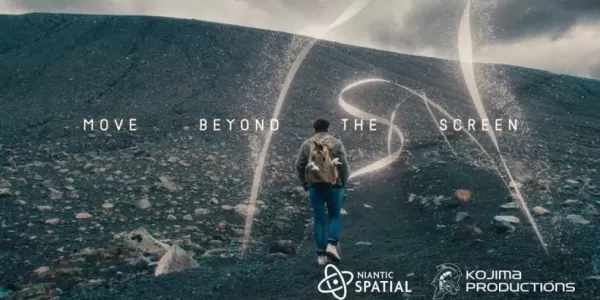 Nach der kürzlich gefeierten 10-Jahr-Feier hat Kojima Productions eine Partnerschaft mit Niantic Spatial bekanntgegeben.Ein Trailer, der den Stil des Flaggschiff-Titels des Studios, Death Stranding, aufgreift, wurde während eines jüngsten Livestream-Autor : Daniel May 01,2026
-
 Wedding Fashion Makeup DressupHerunterladen
 -
 Banana Trainer Vol.2Herunterladen
 -
 Idle Workout Master: MMA heroHerunterladen
 -
 Monster Girl 1000Herunterladen
 -
 3001: A MILF OdysseyHerunterladen
 -
 Hail To The KingHerunterladen
 -
 Super Jogo da SaúdeHerunterladen
 -
 Suspended Sex Simulator~Bound Mama and the Four GoblinsHerunterladen
 -
 GaduatedHerunterladen
 -
 Hunte: Space PiatesHerunterladen



![Taffy Tales [v1.07.3a]](https://imgs.ehr99.com/uploads/32/1719554710667e529623764.jpg)



- Black Ops 6 Zombies: So konfigurieren Sie die Beschwörungskreisringe auf Citadelle des Morts
- Roblox: Neueste DOORS-Codes veröffentlicht!
- Harvest Moon: Lost Valley DLC und vorbestellte Details enthüllt
- Silent Hill 2 Remake erscheint 2025 für Xbox und Switch
- Roblox: Blox Fruits-Codes (Januar 2025)
- Roblox: Einfrieren von UGC-Codes (Januar 2025)
-
1Top-Arcade-Klassiker und neue Hits
-
2So organisieren Sie Ihre Medienbibliothek
-
3Die besten kostenlosen Puzzlespiele bei Google Play
-
4Führende soziale Plattformen für Android -Geräte
-
5Die besten kostenlosen Kartenspiele, die Sie jetzt spielen können
-
6Android -Puzzle -Spiele, die Ihre Gehirnfähigkeiten verbessern