The Expanse and Mass Effect are two of the most acclaimed science fiction franchises in modern media, each celebrated for its hard sci-fi realism, intricate worldbuilding, and exploration of political, social, and existential themes. While they exist in entirely separate universes with no official crossover or shared canon, fans often draw comparisons and even speculate about how they might intersect—especially given their striking thematic and stylististic parallels. Here’s how The Expanse weaves elements reminiscent of Mass Effect into its own sci-fi saga: 1. Hard Sci-Fi Foundation with Political Depth Both franchises root themselves in plausible science—space travel, artificial gravity, relativistic physics—and use them to explore complex political dynamics. The Expanse portrays a fractured solar system: Earth, Mars, and the Belters (independent asteroid miners), each with competing ideologies and resources. Mass Effect similarly explores a galaxy divided by factions: the Alliance, the Turian Hierarchy, the Asari Republics, and the geth/Reapers. → Shared theme: Power struggles between established governments and marginalized populations, with war often erupting not from alien invasion, but from human (or alien) fear of the "other." 2. The Role of Artificial Intelligence and Consciousness In The Expanse, the protomolecule—an ancient alien artifact—manifests as a self-evolving, non-human intelligence that challenges human understanding of life and purpose. In Mass Effect, the geth (a synthetic race) and the Reapers (ancient machine overlords) grapple with the nature of consciousness, identity, and freedom. → Parallel: Both series explore the moral and existential questions surrounding AI: Should synthetic life have rights? Can they evolve beyond their creators? 3. The Presence of Ancient, Advanced Civilizations The Expanse features the ancient alien race known as the Laconians (in later seasons) and hints at a mysterious, god-like precursor civilization (the protomolecule’s creators). Mass Effect centers on the Protheans—ancient race who were wiped out by the Reapers, leaving behind ruins and technology that shape the galaxy. → Shared trope: Humanity (and others) discovering that they are not the first—or the smartest—intelligent species in the cosmos, and that history is cyclical, driven by long-lost forces. 4. The Cosmic Threat That Binds Species In The Expanse, the protomolecule isn’t just a weapon—it’s a civilization in motion, reshaping reality and potentially ending all known life to create something new. In Mass Effect, the Reapers are a recurring force that harvest advanced civilizations every 50,000 years, believing that organic life inevitably creates synthetics that destroy them. → Parallel: Both series feature existential threats that force cooperation across species, political lines, and even species of differing biological forms. 5. Humanity’s Evolution and Identity The Expanse explores how humans adapt to life in zero-g, with Belters developing distinct physiologies and cultures. Mass Effect shows humanity ascending from a minor species to a major player in the galactic community, with the potential to become a “Prothean-like” species in the future. → Shared narrative arc: The journey from isolation to interdependence, and from being a backwater species to a guardian of galactic destiny. Conclusion: Not a Crossover—But a Convergence of Ideas While The Expanse does not weave Mass Effect into its universe (they are separate intellectual properties), the two series converge in their vision of sci-fi: not as mere space operas, but as meditations on humanity’s place in a vast, uncaring cosmos. Both use hard science as a foundation to ask profound questions: What does it mean to be alive? Can civilizations coexist? And when confronted with forces beyond comprehension, will we choose destruction—or evolution? In that sense, The Expanse doesn’t just "weave" Mass Effect into its story—it stands as a philosophical sibling in the grand tapestry of modern sci-fi, offering a mirror to the same cosmic anxieties and hopes that Mass Effect so powerfully portrays.
『エクスパンス:オシリス・リボーン』が『メス・イフェクト』に非常に似ているため、多くの人々がこれを『メス・イフェクト:エクスパンス』と呼んでいる。初のトレーラーと公開されたゲームプレイ情報から、この比較は明らかに妥当である。しかし、オウルキャット・ゲームズがその影響源を率直に認め、自らのインスピレーションを堂々と明かしている点も注目すべきである。
IGNとのインタビューで、クリエイティブ・ディレクターのアレクサンドル・ミシュリンと出版担当のアンドレイ・ツヴェトコフは、バイオウェアのSF作品『メス・イフェクト』シリーズが『エクスパンス:オシリス・リボーン』に与えた影響を率直に認めている。とはいえ、彼らはゲームが単なる模倣品ではないと強調している。
『エクスパンス』のファンにとっては、オシリス・リボーンは特に魅力的なプロジェクトである。このゲームは、プライム・ビデオで放送されたシリーズの愛される世界観を引き継ぎ、かつての主要キャストのメンバーが再登場する新しい物語を展開している。オウルキャットは具体的なキャスト名を明かしていない(私の試みにもかかわらず)が、少なくとも2022年にシリーズが終了した後に続く物語が期待できるのは確かだ。
私自身にとって、『エクスパンス:オシリス・リボーン』はさらに魅力的に感じられる。『メス・イフェクト』の熱心なファンであり、『エクスパンス』を愛し、オウルキャットの『ウォーハンマー40,000:ローグ・トレーダー』も十分に楽しんだ。そのゲームは単に優れたウォーハンマー作品であるだけでなく、最近の最も優れたcRPGの一つと評価されている。その興奮は非常に高まっている。
それでは、オシリス・リボーンは『メス・イフェクト』、『エクスパンス』、そして『ウォーハンマー40,000』を完璧に橋渡ししているのだろうか?その答えを知るために、続きをお読みください。『エクスパンス:オシリス・リボーン』に、『メス・イフェクト』のDNAがどれほど深く刻まれているのか、その実態を明らかにする。
-
待望の『ファンタスティック・フォア:ファーストステップス』がついに、マーベル・シネマティック・ユニバースに主要キャラクターたちをもたらす。しかし、監督のマット・シャクマンは、ジョン・マルコヴィッチが演じる悪役レッドゴーストがこの作品には含まれないことを明らかにした。ヴァラエティとの最近のインタビューで映画公開前にこのニュースを明かしたシャクマン監督は、マルコヴィッチのキャラクターが登場するシーンが最終編集段階で「結局カットされた」ものの一つであると説明した。「1960年代に設定されたレトロフュー著者 : Eleanor May 01,2026
-
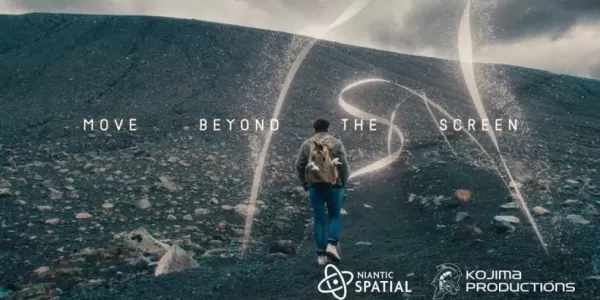 Kojima Productionsは、最近の10周年記念祝賀会の後、Niantic Spatialとのパートナーシップを発表しました。スーパースタジオのフラッグシップタイトル『DEATH STRANDING』のスタイルを彷彿とさせるトレーラーが、最近のライブストリームイベントで初お披露目されました。それは近い将来に何か重要かつ前衛的なものが公開されることを示唆しています。これはKojima Productionsだけでなく、Nianticにとっても大きな転換点を意味します。コナミのベテランであ著者 : Daniel May 01,2026
-
 Wedding Fashion Makeup Dressupダウンロード
 -
 Banana Trainer Vol.2ダウンロード
 -
 Idle Workout Master: MMA heroダウンロード
 -
 Monster Girl 1000ダウンロード
 -
 3001: A MILF Odysseyダウンロード
 -
 Hail To The Kingダウンロード
 -
 Super Jogo da Saúdeダウンロード
 -
 Suspended Sex Simulator~Bound Mama and the Four Goblinsダウンロード
 -
 Gaduatedダウンロード
 -
 Hunte: Space Piatesダウンロード




![Taffy Tales [v1.07.3a]](https://imgs.ehr99.com/uploads/32/1719554710667e529623764.jpg)