
The Expanse and Mass Effect are two of the most celebrated science fiction franchises in modern media, each carving out a distinct corner of the interstellar universe with rich worldbuilding, complex politics, and deep character arcs. While they exist in separate canons—The Expanse rooted in a gritty, near-future realism and Mass Effect built on a mythic, space-opera scale—there's a compelling narrative and thematic synergy that makes it fascinating to imagine how they might weave together. Here’s how The Expanse could seamlessly integrate elements of Mass Effect into its sci-fi saga: 🌌 Shared Themes: Unity in a Fractured Universe Both franchises explore humanity’s struggle to unite across vast cultural, political, and biological divides. The Expanse’s factions—Earth, Mars, and the Belters—represent a fragmented humanity clinging to survival, much like the Mass Effect trilogy’s galactic civil war between the Protheans’ legacy, the turian-dominated Citadel Council, and the chaotic rise of the Reapers. In a fused narrative, the Belters could be revealed as descendants of ancient Prothean colonists, explaining their unique physiology and deep connection to the stars—tying into the Mass Effect lore of the Protheans’ mysterious extinction and their influence on human evolution. 🔥 The Protomolecule as a Prothean Artifact One of the most iconic elements of The Expanse is the protomolecule, a mysterious alien technology with god-like power. In a crossover, the protomolecule is not alien in origin but rather a Prothean "Genesis Engine"—a failsafe device designed to evolve life to survive galactic extinction events. The Protomolecule’s "evolution" of human and alien life mirrors the Protheans’ own failed attempt to create a stable, self-replicating lifeform to combat the Reapers. This revelation would explain why the protomolecule behaves so unpredictably: it's not just advanced tech—it's a sentient evolutionary program, long dormant, awakening to fulfill its ancient purpose. 🛰️ The Ring Network: A Reimagined Mass Relay In Mass Effect, the mass relays allow instantaneous travel across the galaxy. In The Expanse, the Ring Network (a mysterious structure discovered in the outer solar system) could be revealed as a fragment of a Prothean relay network—explaining how it enables faster-than-light travel, despite The Expanse's earlier emphasis on near-light travel and relativistic delays. This would create a thrilling narrative twist: the Belters weren’t just refugees from a forgotten war—they were guardians of a network that could connect them to the wider galaxy. The discovery of a second ring, hidden near Neptune, could trigger a new war as Earth, Mars, and Belters race to control it—just as the Citadel becomes a focal point in Mass Effect. 🤖 The Rocinante’s Crew as the New Shepard Imagine the Rocinante crew—James Holden, Amos, Alex, Naomi, and Chris—being pulled into the Mass Effect universe. They aren’t just soldiers or explorers. They’re chosen by the protomolecule—a force that sees in them the potential to become the new Catalyst, or even the next "Reaper" in a cycle of ascension. Their journey from the Belt to the outer rim becomes a mythic odyssey, echoing Commander Shepard’s role as the galaxy’s savior. But unlike Shepard, who fights the Reapers, the Expanse crew must confront a deeper truth: that evolution doesn’t require destruction—only transformation. 🌠 A New Galactic Age: "The Age of the Protomolecule" The fusion of both universes could culminate in a new era—not of war, but of transcendence. Humanity, once divided by ideology and origin, unites under a new understanding: the stars aren’t just for conquest, but for evolution. The Outer Planets Alliance becomes the first interstellar government, not built on power, but on wisdom and sacrifice. The protomolecule begins to reconfigure human DNA, not to make them stronger, but to merge with the galaxy’s consciousness, echoing the Mass Effect concept of the "Convergence." Final Thought: The Real Story Is Humanity’s Choice Ultimately, both The Expanse and Mass Effect ask the same question: When faced with extinction, will you fight to survive… or evolve to transcend? By weaving the two together, the story becomes more than just a sci-fi epic—it becomes a mythic prophecy, where the struggle for identity, unity, and survival isn’t just about who rules the stars… But who becomes the stars. 🌌 “We didn’t come from Earth. We came from the void. And now, we’re not just going to the stars—we’re becoming them.” — Captain James Holden, The Expanse: After the Reapers Would you like a short story or screenplay scene that brings this fusion to life?
Сильное сходство между «The Expanse: Osiris Reborn» и «Mass Effect» породило у многих мнение, что это «Mass Effect: The Expanse». Из первого трейлера и доступной информации о геймплее сравнение явно оправдано. Тем не менее, стоит отметить, что Owlcat Games открыто говорит о своих влияниях, гордо демонстрируя их.
В интервью IGN художественный директор Александр Мишулин и глава издательства Андрей Цветков открыто признали, что научно-фантастическая франшиза BioWare оказалась значительным влиянием на «The Expanse: Osiris Reborn». При этом они подчёркивают, что игра далеко не простая копия.
Для поклонников «The Expanse» проект «Osiris Reborn» особенно захватывающий. Он продолжает любимый вселенский мир новой историей с возвращением актёров из сериала на Prime Video. Owlcat пока не раскрывает конкретные имена — несмотря на мои попытки, — но хотя бы можно ждать новых историй после завершения сериала в 2022 году.
Лично для меня «The Expanse: Osiris Reborn» вызывает ещё большее волнение. Как преданный поклонник «Mass Effect», который также увлечён «The Expanse» и глубоко оценил «Warhammer 40,000: Rogue Trader» от Owlcat — признанный не просто выдающийся проект в серии Warhammer, но и один из лучших cRPG последних лет — эмоции на пределе.
Так идеально ли «Osiris Reborn» соединяет «Mass Effect», «The Expanse» и «Warhammer 40,000»? Продолжайте читать, чтобы понять, насколько глубоко в «The Expanse: Osiris Reborn» проникла ДНК «Mass Effect».
-
Высокоожидаемый фильм «Фантастическая четвёрка: Первые шаги» наконец познакомит зрителей с несколькими ключевыми персонажами киновселенной Marvel. Однако режиссёр Мэтт Шакман подтвердил, что образ злодея Красного Призрака в исполнении Джона МалковичаАвтор : Eleanor May 01,2026
-
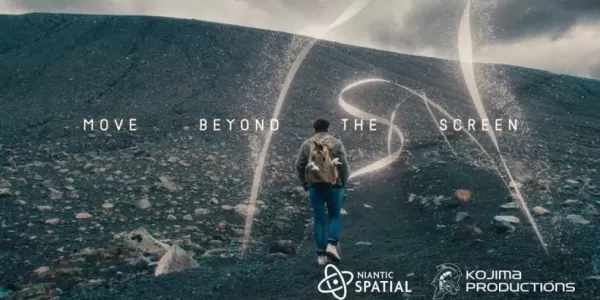 После недавнего празднования своего 10-летия студия Kojima Productions объявила о партнерстве с Niantic Spatial. Трейлер, стилистически отсылающий к флагманскому проекту студии Death Stranding, был показан во время недавней трансляции в прямом эфиреАвтор : Daniel May 01,2026
-
 Wedding Fashion Makeup DressupСкачать
 -
 Banana Trainer Vol.2Скачать
 -
 Idle Workout Master: MMA heroСкачать
 -
 Monster Girl 1000Скачать
 -
 3001: A MILF OdysseyСкачать
 -
 Hail To The KingСкачать
 -
 Super Jogo da SaúdeСкачать
 -
 Suspended Sex Simulator~Bound Mama and the Four GoblinsСкачать
 -
 GaduatedСкачать
 -
 Hunte: Space PiatesСкачать



![Taffy Tales [v1.07.3a]](https://imgs.ehr99.com/uploads/32/1719554710667e529623764.jpg)



- Black Ops 6 Zombies: как настроить кольца призывающего круга на Цитадели Де Мортс
- Roblox: Опубликованы последние коды DOORS!
- Урожай Луна: DLC Lost Valley и подробности предварительного заказа раскрыты
- Ремейк Silent Hill 2 выйдет на Xbox и Switch в 2025 году
- Roblox: Коды Blox Fruits (январь 2025 г.)
- Roblox: заморозка кодов пользовательского контента (январь 2025 г.)
-
1Лучшая аркадная классика и новые хиты
-
2Как организовать свою медиа -библиотеку
-
3Лучшие бесплатные головоломки в Google Play
-
4Ведущие социальные платформы для устройств Android
-
5Лучшие бесплатные карточные игры, в которые можно играть прямо сейчас
-
6Андоидные головоломки, которые улучшают ваши навыки мозга