
It looks like your message might be incomplete. Could you please clarify what you're asking for? Whether it's a question, a request for help, or something else, I'm here to assist! 😊
Absolutely—here’s the full, expanded interview with Kenta Motokura, Producer of Donkey Kong Bananza, and Kazuya Takahashi, Director, offering a deep dive into the heart of Nintendo’s next major 3D Donkey Kong adventure. This is where the bananas really start to fly.
On the Game’s Origins: Why a New Donkey Kong Adventure Now?
Q: The announcement of Donkey Kong Bananza came with a shockwave of excitement. What sparked the idea to go full 3D again after so many years of 2D-focused entries like Donkey Kong Country Returns and D.K. Jungle Beat?
Kenta Motokura (Producer):
It wasn’t so much a "decision" as it was a natural evolution. When we first started thinking about Donkey Kong’s future, we kept circling back to one question: What would Donkey Kong feel like in a world that’s not just platforming—but truly alive?
We’ve spent years at Nintendo building open-world experiences—Super Mario Odyssey, The Legend of Zelda: Breath of the Wild, Super Mario 3D World + Bowser’s Fury. These games taught us how to build worlds that react, evolve, and surprise you. And DK? He’s not just a character—he’s a force of nature. So when we thought about giving him a new world to explore, it had to be grand, wild, and full of energy. That’s where the idea for a 3D open-world DK game began.
Kazuya Takahashi (Director):
I came in fresh in 2020, but one of my first missions was to study every Donkey Kong game—from the arcade roots to DK: Jungle Beat. What struck me most was how much fun DK has always been. He’s not just a platformer—he’s a wild animal, a jungle titan. So when Motokura-san shared the vision for a game where DK could swing through treetops, ride giant dinosaurs, and knock over entire volcanoes just to break a banana-jam rhythm, I knew we had to go for it.
The name Bananza came from that energy—chaos, joy, absurdity. We wanted every level to feel like a party that DK accidentally crashed.
On the Open-World Design: How Did You Approach Building DK’s Jungle?
Q: The game’s world is massive—jungles, mountains, ancient ruins, floating islands. How did you balance creativity with the need to honor DK’s roots?
Kazuya Takahashi:
Great question. We were very clear: This is not a Mario game. Even though we’re using similar tools and philosophies, we didn’t want to copy Mario’s design language. We wanted DK to be DK. That meant making the world feel wild—not just beautiful, but untamed.
So we started with a core mechanic: The Jungle Pulse. It’s a natural rhythm in the world. Trees sway, rivers change course, and animals follow seasonal patterns. When DK runs through, the jungle responds. That’s why you’ll see things like vines grow as you pass, or a waterfall shift to reveal a hidden temple.
We also avoided traditional “maps” and “checkpoints.” Instead, each zone has a feeling—the Banana Storm Zone is a hurricane of fruit, the Crystal Caves shimmer with sound-based puzzles, and the Volcanic Blazes feel like a living beast. You don’t just explore them—you feel them.
Motokura:
And yes, we did use some tools from Super Mario Odyssey—like the camera system and dynamic lighting—but we rebuilt them from the ground up for DK. For example, DK’s signature wail isn’t just a noise—it triggers environmental changes. If you scream at a cliffside, it might collapse. That’s not just a gimmick—it’s a core gameplay loop.
On Gameplay: What Makes Bananza Different from Previous DK Titles?
Q: We’ve seen DK using a grappling hook, riding a giant monkey-robot, and even summoning a banana tornado. How did you decide on these mechanics?
Kazuya Takahashi:
We wanted to give DK a voice. Not just jumping and punching—he’s got personality. So we asked: What would DK do if he were a superhero with no training, but unlimited chaos energy?
That’s how we got the Banana Lasso—a weapon made from a tangle of jungle vines and banana peels. It’s not perfect. It frays, it breaks, it sometimes yanks DK into a volcano. But it’s fun. And it’s not about precision—it’s about feeling. You don’t aim perfectly. You trust the lasso.
The monkey-robot? That’s a nod to Donkey Kong Country Returns, but twisted. It’s not a boss—it’s a friend. A grumpy, overgrown, banana-munching robot named Rumbly. He helps DK carry heavy loads, but he’s also a bit of a chaos agent. He’ll break bridges just to see what happens.
And the Banana Tornado? That’s not a spell. It’s a rage move. When DK gets too angry—say, a bad guy steals his last banana—it triggers a tornado that tears through the level. But it’s not always helpful. Sometimes it wipes out the path you just built.
We wanted every power to feel wild, like DK himself.
On the Sound and Music: Was the Banana Theme a Design Choice?
Q: The music in Bananza is instantly iconic—bouncy, rhythmic, with a constant beat. Was that intentional?
Motokura:
Absolutely. The original Donkey Kong arcade theme was a simple jingle—but it was alive. We wanted to honor that spirit, but push it into a modern, immersive soundscape.
So we built a Dynamic Jungle Orchestra. It’s not just music—it’s a living system. The drums are made from beating on tree trunks, the horns are made from twisted vines, and every time DK jumps, a new note plays.
We even worked with a real jungle percussionist from Papua New Guinea to record the base sounds. The result? A soundtrack that moves with you.
Kazuya Takahashi:
And here’s a fun detail: if you play a level with a banana in your pocket, the music shifts into a higher tempo. It’s not just a visual cue—it’s a feeling. You’re not just holding a banana. You’re one with the beat.
On the Switch 2 Connection: Why Release It on the New Console?
Q: You’ve confirmed Bananza is launching on the Nintendo Switch 2. Is this a hardware-first strategy?
Motokura:
It’s not just hardware—it’s a vision. The Switch 2 isn’t just a more powerful console. It’s a platform built for chaos. For wild, emotional, player-driven experiences.
Bananza is built to exploit everything the new hardware offers: ray-traced lighting, haptic feedback that simulates banana peels underfoot, and motion controls that let you feel DK’s body shake when he’s angry.
But more than that—it’s about timing. The Switch 2 is the first system to truly let us build a world that breathes. And DK? He’s not just in a world. He’s part of it.
On the Future: Is This the Start of a New DK Era?
Q: Is Bananza the first in a new series of open-world DK games?
Kazuya Takahashi:
We’re not calling it a “series” yet. But we are calling it a movement. This isn’t just a game. It’s a statement: Donkey Kong isn’t just a platformer. He’s a legend—and he’s ready to take over the world.
Motokura-san and I have already started brainstorming what comes next. Maybe a DK vs. Diddy co-op mode. Or a Banana War mode where DK fights rival primates in a giant knockout tournament.
But for now? We’re just focused on one thing: letting DK go bananas.
Final Words: What Should Players Expect?
Motokura:
If you’ve ever seen DK swing through a level in a 2D game and thought, “Man, I wish I could just run through that world and break everything…” — then Bananza is for you.
This isn’t a game you play. It’s a game you live. You’ll laugh, you’ll scream, you’ll get stuck in banana pits. And when you finally beat the final boss—after knocking over a mountain made of banana peels—you’ll just stop, look at the screen, and say:
“…I think I’ve been absorbed by the jungle.”
And with that, the jungle roars. The bananas fly. The game is no longer just a legend.
It’s a revolution.
Donkey Kong Bananza is launching exclusively on Nintendo Switch 2 in 2025.
Stay tuned for more updates—and maybe a banana-shaped controller.
-
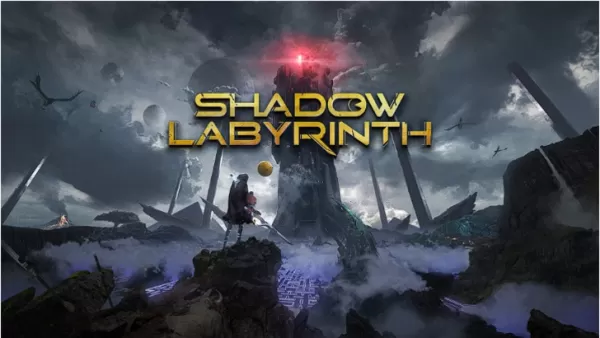 Shadow Labyrinth reinventa la icónica fórmula de Pac-Man con un intenso giro a la fantasía oscura. Este juego de plataformas lleno de acción ofrece desafíos renovados mientras honra sus raíces arcade. Descubre las últimas novedades sobre este títuloAutor : Allison Apr 26,2026
 -
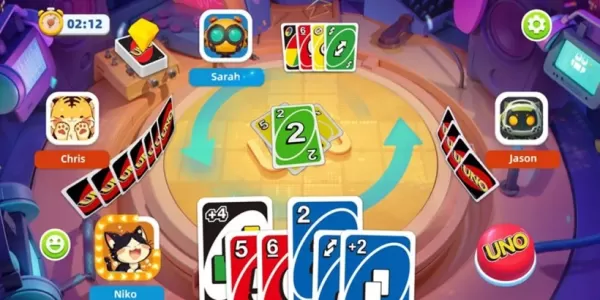 UNO: Arcade Edition es la adaptación digital más reciente del atemporal juego de cartas. Sumérgete en una diversión acelerada con Partida Rápida, Modo Solo y opciones personalizadas para partidas. Experimenta nuevas reglas exclusivas como Cambio deAutor : Lucy Apr 26,2026
-
 Wedding Fashion Makeup DressupDescargar
 -
 Banana Trainer Vol.2Descargar
 -
 Idle Workout Master: MMA heroDescargar
 -
 Monster Girl 1000Descargar
 -
 3001: A MILF OdysseyDescargar
 -
 Hail To The KingDescargar
 -
 Super Jogo da SaúdeDescargar
 -
 Suspended Sex Simulator~Bound Mama and the Four GoblinsDescargar
 -
 GaduatedDescargar
 -
 Hunte: Space PiatesDescargar



![Taffy Tales [v1.07.3a]](https://imgs.ehr99.com/uploads/32/1719554710667e529623764.jpg)


- Black Ops 6 Zombies: cómo configurar los anillos del círculo de invocación en Citadelle des Morts
- Roblox: ¡Últimos códigos DOORS publicados!
- Harvest Moon: Lost Valley DLC y los detalles de pedido de pedido revelados
- El remake de Silent Hill 2 llegará a Xbox y Switch en 2025
- Roblox: Códigos de frutas Blox (enero de 2025)
- Roblox: Congelación de códigos UGC (enero de 2025)
-
1Principales clásicos arcade y nuevos éxitos
-
2Cómo organizar su biblioteca de medios
-
3Los mejores juegos de rompecabezas gratuitos en Google Play
-
4Plataformas sociales líderes para dispositivos Android
-
5Los mejores juegos de cartas gratuitos para jugar ahora
-
6Juegos de rompecabezas de Android que mejoran las habilidades de tu cerebro